
Chapter 18: The Time Is at Hand
Chapter 18: The Time Is at Hand
Written by David Chilton
Chapter 18: Misconstruing Federal Theology
Chapter 18: Misconstruing Federal Theology
Written by Stephen Perks
A review of David A. Weir’s The Origins of the Federal Theology in Sixteenth-Century Reformation Thought (Oxford: The Clarendon Press, 1990, ISBN 1-09-826691-0), from Calvinism Today, Vol. III, No. 4, (October 1993)
14: Philosophy of Voting & 9 Marks On The Gospel And Culture
14: Philosophy of Voting & 9 Marks On The Gospel And Culture
Written by
This week we had a great discussion on voting. It’s a timely issue and needs to be seriously thought about by all Christians. How should we support the existing government? Should we dissent? Is there such thing as a wasted vote? We covered the RPCNA’s voting stance, mostly focusing on the supremacy clause of the US Constitution (stating that the supreme authority is itself and the laws made) and the religious pluralism upheld by the First Amendment (explicitly denying the First Commandment). Then we discussed an article on the 9Mark website (see link below) regarding the Gospel and Culture. We encourage you all to visit the page and engage them in the comment section! Cheers folks!
Here are some recommended links for further study:
- Tanner’s Whiskey Sour recipe
- The US Constitution Weighted in the Balance
- RPCNA’s stance on voting
- Does the Gospel Include the Transformation of Society? 9Marks article
- Don’t Limit the Gospel by Joel McDurmon (video)
- What is the Gospel of Jesus Christ? by Jeff Durbin of Apologia (video)
- What is the Gospel? by John Howell (minisode)
- The Law: A City on a Hill by John Howell (sermon)
“Religious liberty is letting every man choose his own way to hell.”
Part 2: Question 7: What About “Democracy”?
Part 2: Question 7: What About “Democracy”?
Written by Gary North and Gary Demar
Appendix E
Appendix E
Written by Gary North
Chapter 18
Chapter 18
Written by James B. Jordan
Appendix 2: Psalms
Appendix 2: Psalms
Written by Ray Sutton
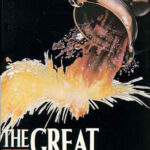
The Great Tribulation
Written by David Chilton
In this book, Chilton confidently and simply proposes that the Great Tribulation, which many expect to arrive in the near future, is actually a past event. To substantiate his argument, he gives an honest hermeneutical appraisal of Christ’s teaching in the Olivet Discourse (Matt. 24; Lk. 21; Mk. 13) as well as other places in the Gospels, and gives a topical commentary on the book of Revelation – all this to successfully demonstrate that these events find their fulfillment in our past, not in our future. Perhaps you disagree – you chuckle as you read this and asseverate in your mind that such a teaching is manifestly impossible. Yet, have you ever read the arguments? Challenged your own? Don’t shy away from this great book! Let it challenge you! If, after reading, you still disagree… fine. But don’t fail to give a little attention to one of the most quickly advancing eschatological positions today!
Are we living in the Last Days? Are the signs of our times the Signs of the End? Is the Great Tribulation just around the corner?
For almost three generations evangelical Christians have answered these questions with an unequivocal “YES”!
In this challenging new book by David Chilton, all the prophetic passages of Scripture dealing with the End Times are re-examined with careful attention to every revealing detail. And his conclusions are nearly as startling as the prophesies themselves.
The Great Tribulation is the kind of sane, balanced, and easy to understand introduction to End Times theology that Christians have needed from a long, long time.
Sandwiched by the comments of Gary North, the book has the following chapters:
- The Terminal Generation
- Coming on the Clouds
- The Coming of the Antichrist
- The Last Days
- The Coming of the New Covenant
- The Four Horsemen
- Vengeance for the Martyrs
- The Book is Opened
- Jerusalem Under Siege
- All Creation Takes Vengeance
- It is Finished!
Key Points
-
The Great Tribulation:
- Chilton argues that the “Great Tribulation” mentioned in the Bible refers to the destruction of Jerusalem and the Temple by the Roman army in A.D. 70.
- This event was a judgment on Israel for rejecting Jesus Christ and was prophesied by Jesus in passages like Matthew 24, Mark 13, and Luke 21.
-
Interpretation of Scripture:
- Chilton emphasizes that Scripture should interpret Scripture, meaning that Biblical prophecies should be understood within their original context and not through modern interpretations or current events.
- The term “generation” in Matthew 24:34 refers to the people living at the time of Jesus, indicating that the prophesied events would occur within their lifetime.
-
Symbolism in Prophecy:
- The book explains that the prophetic language used in the Bible, such as the darkening of the sun and moon, and stars falling, is symbolic and not meant to be taken literally.
- These symbols represent the judgment and fall of nations or systems, such as the fall of Jerusalem.
-
Antichrist:
- Chilton discusses the concept of the Antichrist, explaining that it refers to a system of apostasy and false teachers within the early Christian Church, not a single individual or a future figure.
- The Antichrist was already present in the first century, as indicated by the letters of the Apostle John.
-
The Last Days:
- The “last days” mentioned in the Bible refer to the period between Christ’s first coming and the destruction of Jerusalem in A.D. 70.
- This period was characterized by the outpouring of the Holy Spirit, the spread of the Gospel, and the increasing apostasy within the Church.
-
Theological Implications:
- The destruction of Jerusalem marked the end of the Old Covenant system and the establishment of the New Covenant, with the Church as the new Temple.
- This event was a sign of Christ’s reign and the judgment on those who rejected Him.
Conclusion
David Chilton’s “The Great Tribulation” presents a detailed interpretation of Biblical prophecies, focusing on the historical fulfillment of these prophecies in the destruction of Jerusalem in A.D. 70. The book challenges modern interpretations that place the Great Tribulation in the future, instead arguing that it was a past event with significant theological implications for the early Church and the establishment of the New Covenant.
#19: The Meat of the Word Q&A
#19: The Meat of the Word Q&A
Written by