
Freedom Conference: The Biblical, Christian Duty to Rebel
Freedom Conference: The Biblical, Christian Duty to Rebel
Written by
Session 1 at the 2016 Freedom Conference in Tucumcari, New Mexico. Immanuel Baptist Church hosted Bojidar Marinov as featured speaker. In this opening session, we begin to talk about the prevalent, but greatly mistaken, interpretation of Romans 13:1-7 that would have Christians yield unqualified obedience to even the worst of civil states. Marinov shows that, in its historical context (specifically, the pagan concept of “oneness of being,” which animated the Roman empire,) Paul’s words in that passage are actually revolutionary, and not merely in the sense of “innovative.” They are revolutionary in the sense of “seditious,” and they spelled the eventual end of that beastly empire.
Lesson 20: America’s Free Markets
Lesson 20: America’s Free Markets
Written by
Joel McDurmon of discusses the role of Christian Worldview, politics, theology, and how to restore our American Republic.
Download the FREE Study Guide!
Get the book: Restoring America: One County at a Time
Appendix 2 – Socialism, The Anabaptist Heresy
Appendix 2 – Socialism, The Anabaptist Heresy
Written by David Chilton
Chapter 19: Loved in Absentia
Chapter 19: Loved in Absentia
Written by R.J. Rushdoony
Chapter 20: The Resurrection of the Dead
Chapter 20: The Resurrection of the Dead
Written by R.J. Rushdoony
Chapter 21: The Army on the Mountains
Chapter 21: The Army on the Mountains
Written by R.J. Rushdoony

Chalcedon Foundation Articles and Essays
Written by
The Chalcedon Foundation® is a think tank for the self-governing Christian, devoted to the research, publishing, and promotion of Christian Reconstruction. We believe that the Christian faith is applicable to every area of life and thought and that all things are to be “reconstructed” according to God’s revealed will in Scripture.
This podcast is a collection of articles and essays narrated by volunteers from Reconstructionist Radio on behalf of Chalcedon. The authors include R.J. Rushdoony, Martin Selbrede, Mark Rushdoony, Andrea Schwartz, and more.
Lesson 19: Freedom In The Marketplace
Lesson 19: Freedom In The Marketplace
Written by
Joel McDurmon of discusses the role of Christian Worldview, politics, theology, and how to restore our American Republic.
Download the FREE Study Guide!
Get the book: Restoring America: One County at a Time
Appendix 1 – Deja Vu: A Romp Through Ronald Sider’s Second Edition
Appendix 1 – Deja Vu: A Romp Through Ronald Sider’s Second Edition
Written by David Chilton
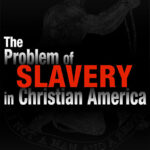
The Problem of Slavery in Christian America
Written by Dr. Joel McDurmon
Today’s Christians and conservatives are largely unaware of the extent of the suffering of blacks in American History, from slavery to Jim Crow to the 1960s and even to today. They are largely unaware how systematic it was and what institutions were created specifically to maintain the injustices. Christians are largely unaware that their own clergy and churches were among the leading proponents of the systems, and have no idea of the convicting and sad reasons why, or of the theological justifications employed for turning a blind eye to the injustice, or worse, active perpetuation of it. That such theologies are still widely taught today—and are in some cases the norm—is not a good sign when so many social ills still surround a silent church. In general, Christians and conservatives are not nearly as informed as they may think when it comes to understanding black history in the United States and the black saga it contains.
The Problem of Slavery in Christian America aims at providing otherwise well-intended Christians and conservatives a deeper understanding of that history, a starting point for discussion and, if necessary, repentance, and with a biblical response to the larger problem of racism, all while refusing to capitulate to non-Christian leftism.